

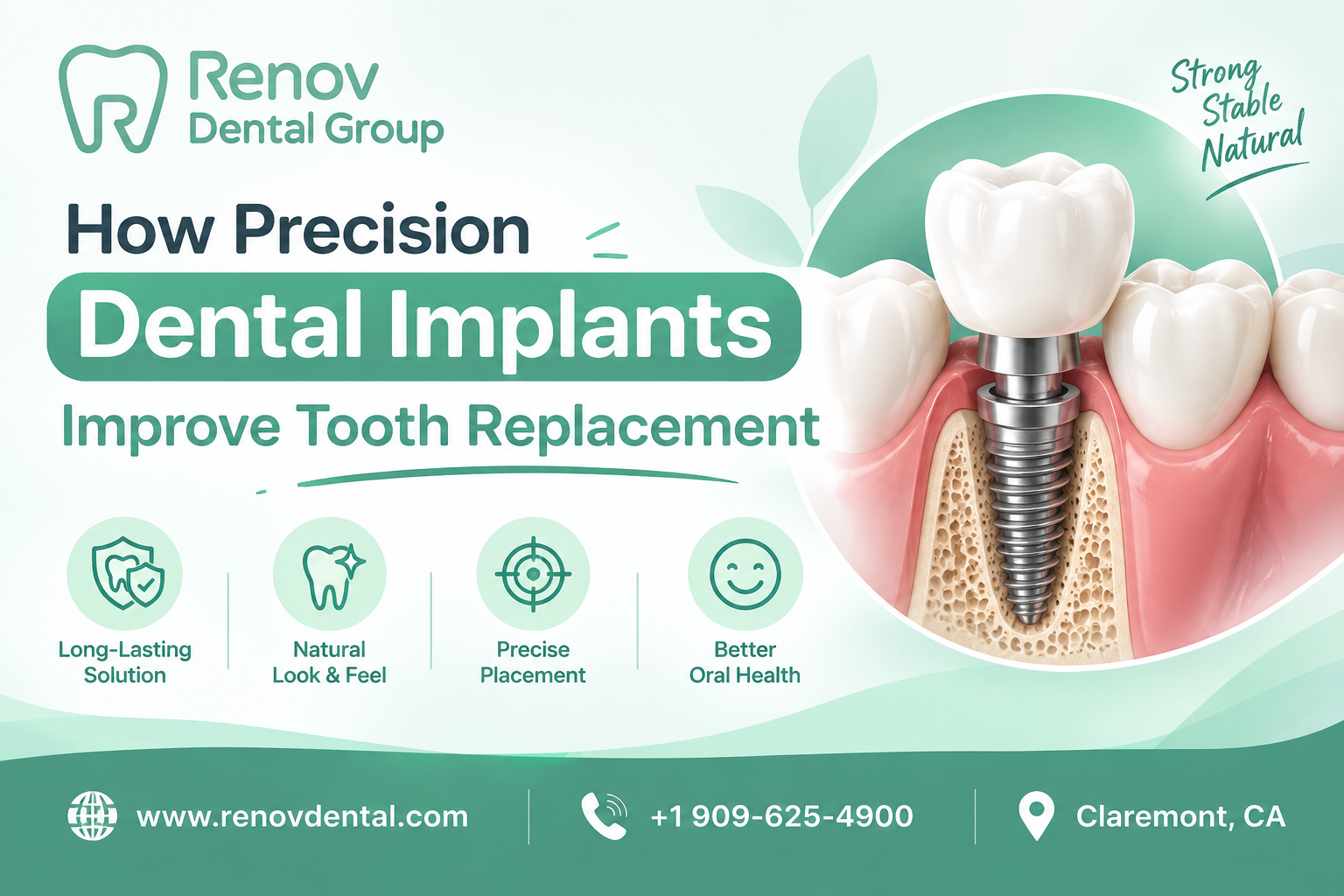
Missing teeth can affect how you eat, speak, and smile. Dental implants offer a way to replace missing teeth with a strong base for artificial teeth. Today, advanced planning methods can help dentist understand the mouth and jaw before treatment begins. Precision dental implants and a CT guided implant procedure can help patients learn more about their treatment options. At Renov Dental Group, patients can seek guidance on tooth replacement and find out which approach may suit their dental needs.
What Are Precision Dental Implants?
Precision dental implants are planned with care to help place an implant in a suitable position in the jawbone. An implant is a small post that acts like an artificial tooth root. After healing, it can support a crown, bridge, or other tooth replacement.
Careful planning helps dentist study the available bone, nearby teeth, and important structures in the mouth. This information helps them choose an appropriate implant position. The final plan depends on each patient’s oral health, bone condition, and treatment goals.
What Is a CT-Guided Implant Procedure?
A CT guided implant procedure uses detailed images of the jaw to help plan dental implant placement. A CT scan creates cross-sectional images that show the shape and structure of the jawbone. Dentists can use these images to assess bone depth, bone width, and the location of nearby nerves and other structures.
The images help the dental team plan where the implant may be placed. In suitable cases, the plan can also be used to create a surgical guide. This guide helps direct implant placement during treatment.
How Does CT-Guided Planning Help?
Dental implant treatment requires careful attention to the jawbone and surrounding tissues. CT-guided planning gives the dentist more information than a basic visual check alone. It can help with treatment planning, especially when the jaw has limited bone or important structures are nearby.
However, the right approach depends on the individual case. A CT scan does not guarantee a perfect result or remove every treatment risk. Your dentist will explain the benefits, limits, and other options before recommending a procedure.
Who May Need Precision Dental Implants?
Adults with one or more missing teeth may be suitable for dental implants. However, healthy gums and enough jawbones are important factors. Some patients may need additional treatment before implant placement.
People with certain health conditions or habits may also need extra checks before treatment. A dental examination helps determine whether implants are suitable. Your dentist may review your medical history, examine your gums, and recommend scans when needed.
What Happens During the Treatment Process?
The process usually begins with a consultation and dental examination. Your dentist reviews your oral health and discusses your goals. If needed, scans help create a detailed treatment plan.
During implant placement, the dentist positions the implant in the jawbone. The area then needs time to heal as the bone joins with the implant. Once healing is complete, a suitable replacement tooth can be attached. The full process may take several months, depending on healing and the treatment plan.
Choose Renov Dental Group for Implant Guidance
If you are exploring precision dental implants, getting clear information is an important first step. Renov Dental Group can help you understand implant options, treatment planning, and the checks needed before surgery.
Contact Renov Dental Group to arrange a consultation and discuss whether a CT guided implant procedure may be appropriate for you. Early planning can help you make an informed choice about replacing missing teeth.
Conclusion
Replacing missing teeth can support everyday comfort and help restore your smile. Precision dental implants offer a planned approach to tooth replacement, while a CT guided implant procedure helps dentist assess the jaw and plan implant placement. The right treatment depends on your oral health and individual needs. Contact Renov Dental Group today to discuss your options and take the next step toward a healthier smile.